You're sitting on the couch, feeling quite relaxed, when suddenly your heart starts racing. Your chest tightens, your hands tremble, and a wave of fear washes over you. What is happening? you ask yourself. Is everything okay with the baby? Panic attacks during pregnancy can come out of nowhere and completely throw you off balance. But there is hope: when you understand what is happening in your body, you can learn to cope—and you are not alone on this journey.

Hormones in Turmoil: Why Your Body is on a Roller Coaster
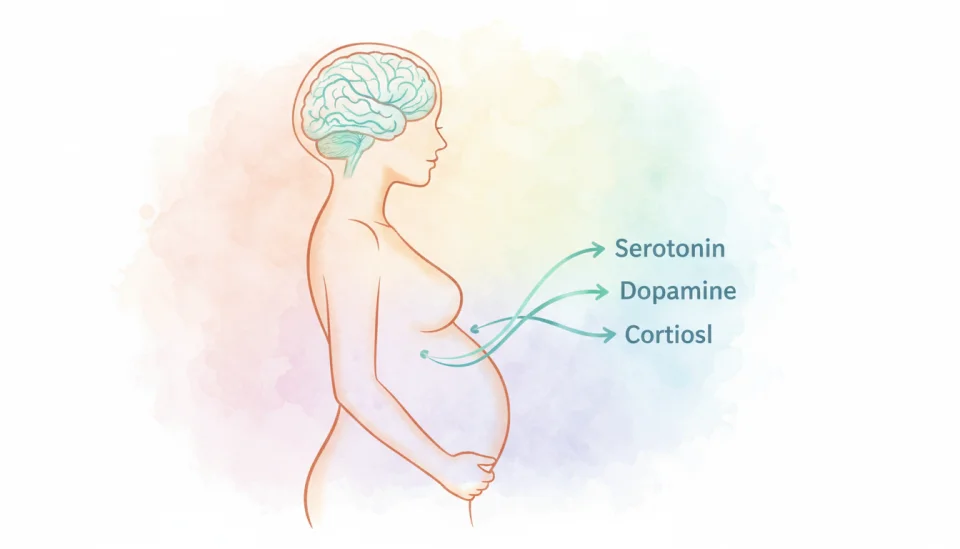
During pregnancy, your body undergoes a hormonal revolution. Progesterone, estrogen, and cortisol rise in waves—and these hormones affect not only your body but also your brain. They directly influence neurotransmitters like serotonin and dopamine, which are responsible for your mood and emotional balance.
A rapid increase or decrease of these hormones can lead to temporary mood swings. Sometimes you feel euphoric, and in the next moment, you may feel downcast or anxious. This is entirely normal—your brain is adjusting to the new hormonal landscape.
How Hormones Can Trigger Panic
Some women’s nervous systems react particularly sensitively to these changes. Elevated cortisol levels can activate the stress response, while fluctuating serotonin levels can make it harder to regulate anxiety. The result? Your body switches to alarm mode—even when there is objectively no danger.
- Racing heart and shortness of breath: Your body prepares for “fight or flight.”
- Dizziness and trembling: Adrenaline floods your veins.
- Feeling of unreality: Your brain struggles to process the overwhelm.
- Fear of losing control: Panic feeds on itself.
Normal Pregnancy Anxiety or Panic Disorder? How to Recognize the Difference
Transient feelings of sadness, irritability, emotional lability, and anxiety during pregnancy are generally considered normal. Almost every expectant mother experiences these moments of uncertainty: Will I be a good mother? Will everything be alright? These thoughts come and go.
However, a panic disorder goes far beyond this. Here are the key distinguishing features:
Normal Pregnancy Anxiety
- Concerns are understandable and tied to specific situations.
- You can distract yourself and calm down.
- The anxiety does not significantly affect your daily life.
- You can talk about it and feel better afterward.
Panic Disorder
- Attacks come unexpectedly and without identifiable triggers.
- Intense physical symptoms (racing heart, shortness of breath, dizziness).
- Fear of the next attack dominates your daily life.
- You avoid places or situations out of fear of panic.
- You feel increasingly isolated and helpless.
Women with a history of anxiety disorders, depression, or hormonal sensitivities are at higher risk of developing panic attacks during pregnancy. Additionally, a lack of social support, chronic stress, and unfavorable life circumstances can increase this risk.

Pathways Out of Panic: Treatment and Support That Truly Help
The good news: panic attacks during pregnancy are treatable, and you don't have to go through this alone. If panic interferes with your daily life and you can't manage your life anymore, professional help is essential—and that's perfectly okay.
Therapeutic Support
Cognitive Behavioral Therapy (CBT) has proven to be particularly effective. Here, you learn to recognize panic triggers, change thought patterns, and cope with physical symptoms. Many therapists offer specialized programs for pregnant women.
Mindfulness-based therapies can also help you not to get swept away by panic but to observe it as a temporary wave that will pass.
Medication Treatment
In severe cases, medications can be used as a last resort. Your doctor will weigh which options are safe for you and your baby. Many women fear the use of medication during pregnancy—yet sometimes untreated panic disorder poses a greater risk.
Holistic Approaches
- Talk therapy: A safe space to voice fears.
- Group therapy: Sharing with other affected women can be incredibly relieving.
- Midwifery care: A familiar contact throughout the entire pregnancy.
- Psychiatric support: Particularly important with pre-existing mental health conditions.

Your Toolbox: Self-Care and Stress Management in Daily Life
In addition to professional help, there are many things you can do yourself to alleviate hormonally induced psychological symptoms. Regular breaks, progressive muscle relaxation, meditation and mindfulness training, as well as gentle movement support your recovery and help reduce stress and panic attacks.
Emergency Breathing Techniques
When panic strikes, your breath is your best ally. Try the 4-7-8 breathing: Breathe in through your nose and count to 4, hold your breath for 7 seconds, exhale through your mouth while counting to 8. Repeat this four times. This technique activates your vagus nerve and signals your body: “Everything is safe.”
Your Daily Rituals
- Morning routine: Start gently into the day—perhaps with a short meditation or a gratitude journal.
- Movement: Pregnancy yoga, nature walks, or swimming can do wonders.
- Sleep hygiene: Regular bedtimes and a calming evening ritual.
- Nutrition: Avoid blood sugar fluctuations by having regular, balanced meals.
- Social contacts: Spend time with people who do you good.
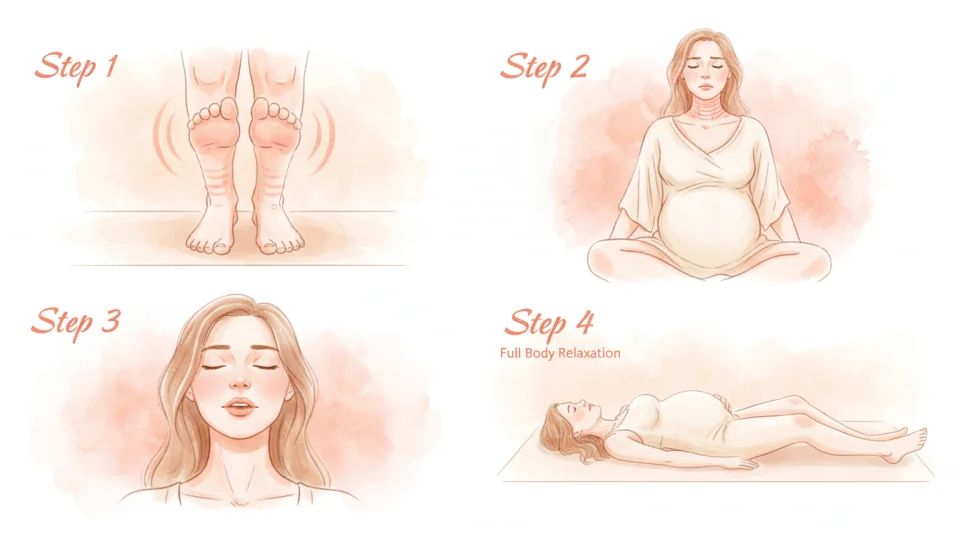
Progressive Muscle Relaxation
This technique helps you consciously perceive and release physical tension. Tense different muscle groups in sequence for 5-7 seconds and then consciously relax them. Start at your feet and work your way up.
You Are Not Alone: Experiences from Women Who Have Been Through It
“I thought I was going crazy. No one had told me that pregnancy could be like this. When I finally spoke to my midwife about it, I broke down in tears—out of relief. She understood me immediately and connected me with a therapist. That was the turning point.” – Sarah, 32, mother of two
“The breathing exercises literally saved my life. At first, they seemed silly to me, but when I realized I could actually stop a panic attack with them, they became my most important tool. Today I also teach them to my daughter.” – Mei, 28, mother of a daughter
“I had anxiety disorders before pregnancy, but they got worse during pregnancy. My doctor and I decided together on a medication treatment. It was the right decision—for me and for my baby. Today my son is healthy and happy, and so am I.” – Lisa, 35, mother of a son
What These Women Want to Share With You
- Talk about it—silence makes everything worse.
- Seek professional help if you need it.
- Be patient with yourself—healing takes time.
- You are a good mother even if you have panic attacks.
- It will get better—promise.
Panic attacks during pregnancy are frightening, but they do not define you. With the right understanding, support, and tools, you can learn to cope. Your body is doing something incredible right now—and sometimes it just needs a little extra care. Be kind to yourself, just as you will be to your baby. You can do this—one breath at a time.
Article translated from German → View original article
Sources & Research
Research Summary
Während der Schwangerschaft führen hormonelle Veränderungen, insbesondere von Progesteron, Östrogen und Cortisol, zu starken Schwankungen im Neurotransmittersystem, was Stimmungsschwankungen und bei einigen Frauen auch Panikattacken auslösen kann. Es ist wichtig, zwischen normalen Schwangerschaftsängsten und einer behandlungsbedürftigen Panikstörung zu unterscheiden, um geeignete Unterstützung und Behandlung zu gewährleisten. Selbstpflege, Stressbewältigung und professionelle Hilfe spielen eine zentrale Rolle für das psychische Wohlbefinden schwangerer Frauen.
Sources Used
- Hormonelle Stimmungsschwankungen in der Schwangerschaft – so bleiben Sie psychisch stabil (Accessed on 2025-11-07)
- Psychisches Befinden in der Schwangerschaft (Accessed on 2025-11-07)
- Postpartales Angst-Syndrom: Irrationale Sorgen und Panikattacken bei Müttern (Accessed on 2025-11-07)
- so bleiben Sie psychisch stabil (Accessed on 2025-11-07)
- Stimmungsschwankungen in der Schwangerschaft (Accessed on 2025-11-07)
- Psychisches Befinden in der Schwangerschaft (Accessed on 2025-11-07)
- Postpartales Angst-Syndrom: Irrationale Sorgen und ... (Accessed on 2025-11-07)
- Depressionen bei Schwangeren: Risiken & Hilfe (Accessed on 2025-11-07)
- Risikoschwangerschaft und psychische Gesundheit (Accessed on 2025-11-07)
- Angsterkrankungen (Accessed on 2025-11-07)
- Was sind postnatale Stimmungsstörungen? (Accessed on 2025-11-07)
- Vernachlässigte Schwangere werden häufiger depressiv ... (Accessed on 2025-11-07)
- Psychische Krisen und Erkrankungen in der ... (Accessed on 2025-11-07)
Medical Disclaimer
The information provided in this article is for educational purposes only and is not intended as a substitute for professional medical advice, diagnosis, or treatment. Always seek the advice of your physician or other qualified health provider with any questions you may have regarding a medical condition. Never disregard professional medical advice or delay in seeking it because of something you have read on this website.
Similar Posts
10 Natural Methods to Combat Labor Pain – That Really Empower You
The fear of labor pain accompanies many expectant mothers. However, there are effective, natural ways to alleviate pain ...
Mindfulness in Pregnancy: 12 Gentle Exercises to Accompany You Through All Phases
Pregnancy is a time of changes, anticipation, and sometimes uncertainty. Mindfulness exercises help you arrive in each p...
Overwhelmed as a Mother? These 5 Immediate Actions Will Help You Now – and in the Long Run
You are not alone: Overwhelm is part of motherhood. Here you will find concrete immediate help for acute moments, proven...
10 Natural Ways to Gently Alleviate Labor Pain – Without Fear
The fear of labor pain is completely normal – but you are not helpless against it. Discover 10 natural, science-based me...