
It's 5 PM, the kitchen looks like a battlefield, your toddler has just knocked dinner off the table for the third time—and suddenly you feel the anger rising within you. Your heart is racing, your hands are shaking, and you want to scream out loud. If this sounds familiar, you are not alone. Mama rage is a real, often unspoken challenge that many mothers experience. But there are ways to understand it and manage it constructively.
Why Mama Rage Occurs: The Hidden Triggers in Everyday Life
Mama rage rarely comes out of nowhere. It arises because mothers often put their own needs aside and are subjected to maximum external control. Daily life is determined by the needs of the children—when they eat, sleep, and play. This feeling of helplessness and overwhelm can manifest in intense anger.

The causes are diverse:
- Unmet needs: Lack of sleep, missing breaks, no time for oneself
- Old emotional imprints: Suppressed childhood anger reactivated by the parenting role
- Overwhelm: Too many tasks, too little support, unrealistic expectations of oneself
- Feeling controlled: The day is dictated externally; your own plans do not count
It’s important to understand: this anger is often a signal that something in your life is out of balance. It shows you that your needs require attention.
Quick SOS Techniques: What You Can Do When Anger Rises
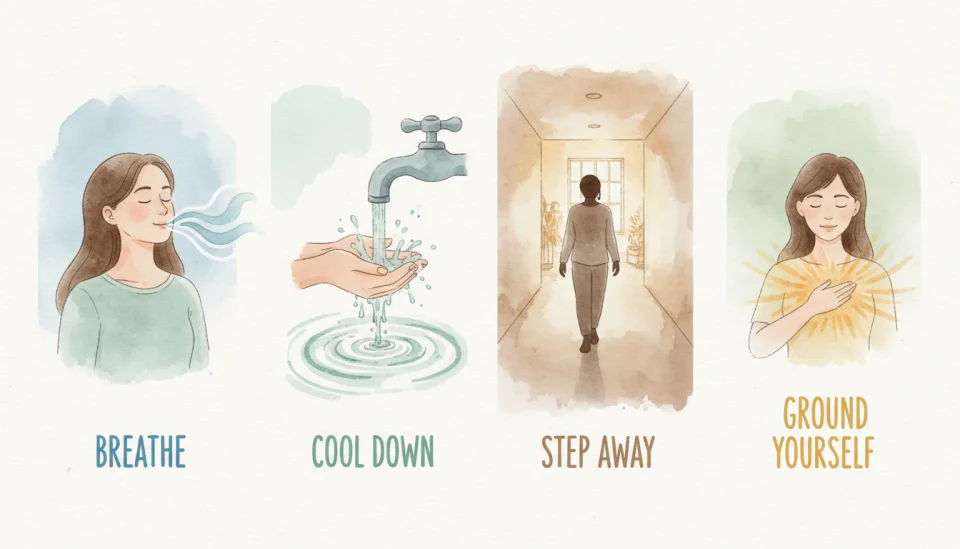
Postpartum anger often manifests suddenly and intensely. In those moments, you need quick calming techniques to control impulsive reactions and avoid escalation. These strategies help you regain control in the here and now:
The 5-4-3-2-1 Method
This grounding technique brings you back from the spiral of anger to the moment. Name out loud or in your mind: 5 things you see, 4 things you hear, 3 things you feel, 2 things you smell, 1 thing you taste. Your nervous system calms down while your brain focuses on these sensory perceptions.
Press the Pause Button
If possible, briefly leave the room. Calmly tell your child: “Mama needs a short break.” Go to the bathroom, take deep breaths, wash cold water over your wrists. This physical interruption can work wonders.
The 4-7-8 Breathing Technique
Breathe in through your nose and count to 4, hold your breath for 7 seconds, breathe out through your mouth and count to 8. Repeat this three to four times. This technique activates your parasympathetic nervous system and sends your body the signal: “It’s safe to calm down.”
- Physical discharge: Stomp in place, clench your hands tightly, or squeeze a stress ball
- Self-compassion statement: Tell yourself: “This is hard right now. I’m allowed to feel overwhelmed. I’m doing my best.”
- Emergency mantra: “This moment will pass. I am safe. My child is safe.”
Long-term Strategies: Finding the Path to Emotional Balance
While acute techniques are important, the key to lasting change lies in long-term strategies. The root of anger often lies in suppressed childhood anger and unmet needs that can be balanced through conscious engagement and self-care.

Make Your Needs Visible
Keep a rage diary. Note when the anger arises, what happened beforehand, and what need might be behind it. Patterns will become visible: Does anger always come in the evenings? After calls with certain people? When you’ve slept too little?
Establish Micro-Self-Care
You don’t need wellness weekends. Small, daily rituals are sufficient: 5 minutes of quiet morning coffee, 10 minutes of journaling, listening to a favorite song loudly. These micro-moments signal to your system: “I count too.”
Recognize and Resolve Old Patterns
We often react to our children the way our parents reacted to us—or in the opposite way, but just as extreme. Therapeutic support can help recognize these imprints and develop new, healthier response patterns.
- Realistic expectations: Perfection is an illusion. “Good enough” is indeed good enough.
- Regular breaks: Deliberately plan time just for yourself—even if it’s only 30 minutes per week.
- Physical exercise: Exercise helps reduce stress hormones and produce happiness hormones.
- Sleep hygiene: Prioritize sleep whenever possible—fatigue massively increases anger.
Seek Support: You Don't Have To Go Through This Alone
There are specialized counseling services and groups that help mothers understand and process their anger constructively. Seeking professional help is not a sign of weakness, but rather of strength and self-care.

Possible Points of Contact:
- Mother's counseling: Many communities offer free counseling for mothers in challenging phases.
- Psychotherapy: Particularly helpful for deeper emotional issues.
- Support groups: Sharing experiences with other affected mothers can be incredibly relieving.
- Online communities: If you can’t leave the house, moderated online groups offer support.
- Parent consulting: Special programs help integrate stress management and parenting.
Do not hesitate to seek professional help, especially if the anger significantly impacts your life and relationships, or if you have thoughts of harming yourself or others.
Talk to Your Partner: Clearly Communicate Emotional Needs
Mothers should clearly communicate their feelings and needs to receive support from their partner and avoid conflicts. But how do you talk about something as vulnerable as mama rage?
Choose the Right Moment
Not in the heat of the battle, but in a calm moment. Announce the conversation: “I have something important to discuss; can we talk quietly tonight?”
Use I-Messages
Instead of saying “You never help!” say: “I often feel overwhelmed and could use more support with…” Be specific about what you need: “Could you take over dinner three times a week?” instead of vaguely saying “I need more help.”

Explain the Backgrounds
Many partners do not understand how exhausting the constant mental load is. Explain that it’s not just about visible tasks but also about the continuous thinking, planning, and organizing.
- Be specific: “I need 30 minutes just for myself every day” is clearer than “I need more time.”
- Express appreciation: Acknowledge what your partner is already doing before asking for more.
- Find solutions together: Ask each other: “How can we both meet our needs?”
- Regular check-ins: Schedule weekly short conversations to discuss how you are doing.
Remember: Your partner cannot read your mind. Clear, loving communication is key to more understanding and support.
Mama rage is not a personal failure. It is a signal that your needs require attention. With the right tools—from acute techniques to long-term strategies to professional support—you can learn to cope with this challenge. You are not alone, and there is a way back to greater emotional balance and serenity. Be patient with yourself—change takes time, but every small step counts.
Article translated from German → View original article
Sources & Research
Research Summary
Mama-Wut entsteht häufig durch Überforderung, unerfüllte Bedürfnisse und alte emotionale Prägungen, die im Alltag einer Mutter schnell ausgelöst werden können. Effektive Strategien zur Selbstbeherrschung umfassen das Erkennen von Wutauslösern, schnelle Beruhigungstechniken, langfristige emotionale Balance sowie unterstützende Beratungsangebote und offene Kommunikation mit dem Partner.
Sources Used
- Mama-Wut: Woher sie kommt, was sie dir sagen will und wie du mit ... (Accessed on 2025-11-07)
- Postpartale Wut: Verständnis, Ursachen und Hilfe suchen - momcozy (Accessed on 2025-11-07)
- Endlich die unterdrückte Wut der Kindheit loswerden (mit Übung) (Accessed on 2025-11-07)
- Gestörte Mutter-Tochter-Beziehung: 8 Symptome & Spätfolgen (Accessed on 2025-11-07)
- Wut auf Mutter in der Psychologie - Ramón Schlemmbach (Accessed on 2025-11-07)
- Warum Mütter so viel Wut in sich tragen – und was dahintersteckt (Accessed on 2025-11-07)
- Gestresste Mutter: Die wahren Gründe & 5 Tipps dagegen (Accessed on 2025-11-07)
- Jähzorn: Ursachen und Tipps zum Umgang mit Wutanfällen - AOK (Accessed on 2025-11-07)
- Mama Burnout: Wie du Erschöpfung vermeidest und wieder Kraft ... (Accessed on 2025-11-07)
Medical Disclaimer
The information provided in this article is for educational purposes only and is not intended as a substitute for professional medical advice, diagnosis, or treatment. Always seek the advice of your physician or other qualified health provider with any questions you may have regarding a medical condition. Never disregard professional medical advice or delay in seeking it because of something you have read on this website.
Similar Posts
10 Natural Methods to Combat Labor Pain – That Really Empower You
The fear of labor pain accompanies many expectant mothers. However, there are effective, natural ways to alleviate pain ...
Mindfulness in Pregnancy: 12 Gentle Exercises to Accompany You Through All Phases
Pregnancy is a time of changes, anticipation, and sometimes uncertainty. Mindfulness exercises help you arrive in each p...
10 Natural Ways to Gently Alleviate Labor Pain – Without Fear
The fear of labor pain is completely normal – but you are not helpless against it. Discover 10 natural, science-based me...
Understanding Panic Attacks in Pregnancy: When Your Heart Races and Hormones Go Haywire
Suddenly your heart races, you feel short of breath, and fear overwhelms you. Panic attacks during pregnancy can be terr...