You still remember your first postpartum period: the endless cuddle hours on the couch, the silence in the house, the time that belonged only to you and your baby. Now you are expecting your second child – and you can already sense that this time everything will be different. A toddler needing your attention, a household that doesn’t stand still, and you in the midst of it all. But don’t worry: different doesn’t mean worse. With the right preparation and realistic expectations, your second postpartum period can even be more fulfilling than the first.

Emotional Changes: More Composed, but Also Torn
With the first child, everything was new – every diaper, every cry, every sleepless night a premiere. This time you know that this phase will pass. You are more experienced and composed, recognizing the difference between hunger and tiredness cries and knowing that even the toughest nights will end. This emotional maturity is a gift.
At the same time, new feelings may arise: guilt towards the older child, who suddenly seems "grown up." Worries about whether your love can stretch to two. Sadness because you can’t dedicate all your time to the newborn anymore. All these emotions are normal and part of it.
- Allow yourself to love both children differently – love is not divisible but multiplies
- Intentionally plan one-on-one time with the eldest, even if it’s just 10 minutes
- Be alert to signs of emotional burnout and talk about it early
- Celebrate small victories: Both children are fed, dressed, and loved? Perfect!
Many mothers report that their second postpartum period was emotionally more positive because they paid more attention to their needs and actively sought support. You know yourself better – use that knowledge.
Physical Changes: Your Body Needs Rest Just as Much
A common misconception: “The second birth was quicker, so I need less recovery.” Wrong. Your body has accomplished the same feat – regardless of whether the birth was shorter or not. Your pelvic floor was once again put under strain, your uterus needs to shrink back, and your hormones are going haywire.

The difference: This time you can’t stay in bed all day. A toddler needs attention, wants to play, eat, and be comforted. While you cuddled with your first child in the mornings and afternoons, now cuddle times with the baby alternate with active phases with the older one.
How to Protect Your Body Despite Double Burden
- Stay in bed or on the couch as much as possible for the first 10 days – even if the toddler is around
- Avoid climbing stairs and heavy lifting (yes, that includes your firstborn!)
- Use nursing pillows as support for both children during cuddling
- Plan postpartum exercises firmly – your pelvic floor needs them more than ever
- Listen to your body: Pain, heavy bleeding, or exhaustion are warning signs
Remember: Physical recovery is an investment in your long-term health. Taking rest now means more energy for both children later.
Support System: Demand Help Instead of Expecting It
With the first baby, unsolicited visitors, gifts, and food baskets came in droves. With the second? There’s often the assumption: “She’s already experienced; she can handle it.” Many mothers report that they were offered significantly less support – even though they needed it just as much.
The solution: Be specific. Instead of hoping someone will ask if you need help, actively ask for it. This is not a sign of weakness but of self-care and responsibility.
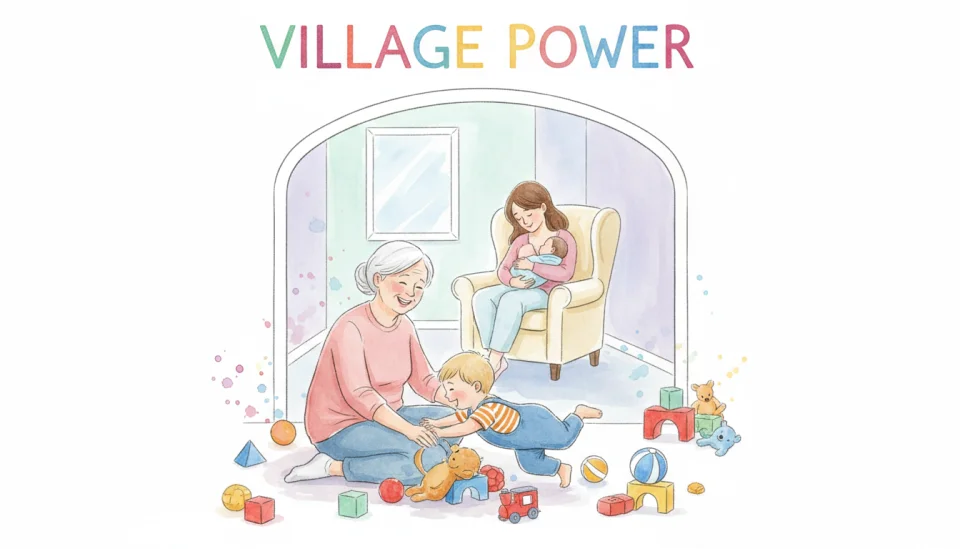
Practical Ways to Organize Support
- Create a list of specific tasks: shopping, laundry, playing with the older one
- Ask visitors to bring food instead of gifts – or both!
- Clearly share chores with your partner: Who takes care of which child and when?
- Utilize grandparents specifically for one-on-one time with the older child
- Organize a meal plan with friends for the first two weeks
Many fathers take on a more active role with the second child because they are more experienced. Use that: Dad can handle entertainment for the older one while you have time with the baby and to rest.
Time Management: Balancing Act Between Two Children
The biggest challenge in the second postpartum period? Finding time for both children and yourself. Your newborn needs you around the clock, while your firstborn doesn’t understand why mom is suddenly less available.
Realistic expectations are key. You won’t be able to meet the needs of both children at all times – and that’s okay. Some days are chaotic, others surprisingly harmonious. Flexibility and self-compassion help more than perfect plans.

Strategies for Daily Life with Two Children
- Synchronize nap times: Use the older one's nap for rest or exclusive baby time
- Set up a play box next to your nursing spot – so the older one can play nearby
- Establish rituals: reading while nursing, cuddling together in the morning
- Radically lower your household standards – vacuuming can wait
- Plan 10 minutes daily just for you: drink tea, breathe, do nothing
Many mothers report that mornings are great for calm activities (cuddling, nursing, reading) and afternoons for more active engagements with the older child. Find your own rhythm – it doesn’t have to be perfect, just practical.
Nursing and Nutrition: New Dynamics at the Breast
Nursing the second child often feels more familiar – you know the positions, understand how to latch, and are more relaxed. But this time you have an audience. Your firstborn is curious, jealous, or wants to nurse again themselves.
Set up a cozy nursing spot that accommodates both children. A large nursing pillow, a cuddly blanket, and a box of special toys that only come out during nursing time can work wonders.
- Explain to the older child in an age-appropriate way what is happening during nursing
- Invite them to snuggle, read aloud, or play quietly
- Prepare snacks and water for yourself and the older child within reach
- Be patient with interruptions – they are part of it
- Consider tandem nursing if your older child is still nursing and you feel comfortable

Pay particular attention to your own nutrition and hydration. Nursing costs energy, and you have less time for leisurely meals. Healthy snacks (nuts, fruit, energy balls), a large water bottle, and prepared meals are invaluable now.
Your Second Postpartum Period: Different, but Wonderful
Yes, your second postpartum period will be different. More active, noisier, more challenging. You will sleep less, juggle more, and sometimes feel like you have to please everyone. But you will also witness your firstborn kissing the baby for the first time, how your heart expands instead of splits, and how strong you truly are.
Use your experience, demand support, lower your expectations of perfection, and be incredibly proud of yourself. You are doing something extraordinary: you are giving two little people the feeling of being loved and safe. And that is more than enough.
Allow yourself rest wherever possible. Celebrate small victories. And remember: this intense time will pass – but the bond you are building now will last forever.
Article translated from German → View original article
Sources & Research
Research Summary
Das zweite Wochenbett unterscheidet sich emotional, physisch und organisatorisch deutlich vom ersten. Mütter erleben oft mehr Aktivität und weniger Ruhe, da sie sich um ein älteres Kind kümmern müssen, während die körperliche Erholung weiterhin wichtig bleibt. Unterstützung durch Partner und Familie sowie ein bewusstes Zeitmanagement sind entscheidend, um die Herausforderungen zu meistern und die Stillzeit zu gestalten.
Sources Used
- Wochenbett beim zweiten Kind (Accessed on 2025-11-06)
- Wochenbettwissen: Wochenbett mit Geschwisterkindern (Accessed on 2025-11-06)
- Was sich beim zweiten Kind wirklich ändert (Accessed on 2025-11-06)
- Zweite Geburt | Wochenbett und Stillzeit erschwert (Accessed on 2025-11-06)
- Das Wochenbett mit Geschwisterkindern (Accessed on 2025-11-06)
- Wochenbettwissen: Wochenbett mit Geschwisterkindern (Accessed on 2025-11-06)
- Wochenbett beim zweiten Kind (Accessed on 2025-11-06)
- DIE DREI PHASEN DES WOCHENBETTS - Familienleben (Accessed on 2025-11-06)
- Was sich beim zweiten Kind wirklich ändert (Accessed on 2025-11-06)
- Zweite Geburt | Wochenbett und Stillzeit erschwert (Accessed on 2025-11-06)
- Vergleich!! Erste und dann zweite Geburt!! (Accessed on 2025-11-06)
- Was sich vom 1. bis zum 3. Kind verändert hat (Accessed on 2025-11-06)
- Wochenbett Zweites Kind - das mache ich diesmal anders! (Accessed on 2025-11-06)
Medical Disclaimer
The information provided in this article is for educational purposes only and is not intended as a substitute for professional medical advice, diagnosis, or treatment. Always seek the advice of your physician or other qualified health provider with any questions you may have regarding a medical condition. Never disregard professional medical advice or delay in seeking it because of something you have read on this website.
Similar Posts
10 Natural Methods to Combat Labor Pain – That Really Empower You
The fear of labor pain accompanies many expectant mothers. However, there are effective, natural ways to alleviate pain ...
Mindfulness in Pregnancy: 12 Gentle Exercises to Accompany You Through All Phases
Pregnancy is a time of changes, anticipation, and sometimes uncertainty. Mindfulness exercises help you arrive in each p...
Overwhelmed as a Mother? These 5 Immediate Actions Will Help You Now – and in the Long Run
You are not alone: Overwhelm is part of motherhood. Here you will find concrete immediate help for acute moments, proven...
10 Natural Ways to Gently Alleviate Labor Pain – Without Fear
The fear of labor pain is completely normal – but you are not helpless against it. Discover 10 natural, science-based me...