
You sit on the sofa, the baby in your arms, and the thought of the empty fridge makes you tired. At the same time, your friend calls: “Can I do anything for you?” – and you hear yourself say, “Oh no, it’s all good.” Does this sound familiar? Many mothers in the postpartum period don’t even know how to ask for help. Yet the right support from friends and neighbors can make the difference between feeling overwhelmed and finding recovery. In this article, I’ll show you how to ask for help specifically – and which small actions can really help.

Why Asking for Help is Difficult – and Why It’s Still Important
Many mothers feel they have to do everything on their own. Often, this is driven by the fear of being seen as weak or incapable. However, the postpartum period is an exceptional situation – physically, hormonally, and emotionally. Your body is healing, your baby needs you around the clock, and your sleep is fragmented. Asking for support during this phase is not a sign of weakness but of self-care and responsibility.
Studies show that social support during the postpartum period reduces the risk of postpartum depression and strengthens the bond with the baby. So, when you seek help, you're not just benefitting yourself – you're also benefiting your child.
Prepare the Best Questions: Clarify What Help You Really Need
Before asking for help, it’s worth getting specific. Vague offers like “Let me know if you need anything” often fall flat because you may not know what you need at the moment – or you might hesitate to follow up.
Questions that can help clarify your needs:
- When do I feel most overwhelmed? (In the morning? In the evening? While cooking?)
- What tasks drain my energy the most right now?
- What would provide immediate relief? (A warm meal? An hour of sleep? A walk alone?)
- Are there recurring tasks someone else could take over? (Grocery shopping, laundry, caring for siblings)
- Do I need more practical help or emotional support?
Once you’ve answered these questions, you can articulate precisely what you need – making it much easier for others to genuinely help you.

How Neighbors and Friends Can Relieve Your Burden – 7 Concrete Examples
Sometimes, friends and neighbors don't even know how they can help. Here are seven practical, everyday ideas that you can directly pass on:
1. Bring Cooked Meals
A warm, nutritious meal is worth its weight in gold. Ask friends to cook something that reheats well – soups, casseroles, curries. Ideally, in portions you can freeze. This way, you’ll have something healthy prepared even on tough days.
2. Run Errands
Send a short list via WhatsApp: milk, bread, fruit, diapers. Many neighbors go grocery shopping anyway and can simply bring your items along. This saves you the trip and energy.
3. Play with Siblings or Go for a Walk
If you have older children, friends or neighbors can entertain them for an hour or two – in the park, at the playground, or at their homes. This gives you time to rest or focus entirely on your baby.

4. Household Help: Dishwasher, Laundry, Vacuuming
Invite a friend to simply be there – while also unloading the dishwasher or starting a load of laundry. Often, it’s easier to accept help when it happens casually.
5. Babysitting so You Can Shower or Sleep
An hour where someone holds your baby while you shower in peace or take a nap can work wonders. Ask specifically for this – many people are eager to help but don’t realize that this is precisely what you need the most right now.
6. Accompanying You to Doctor's Appointments
If you're feeling unsure or exhausted, a friend can accompany you to the pediatrician or for follow-ups. A second person can listen, carry the bag, hold the baby – and provide you with reassurance.
7. Simply Listening – Without Giving Advice
Sometimes, you don’t need solutions, just someone to listen. Ask a friend to come over, have tea, and just be there. Emotional support is just as important as practical help.
How to Ask Specifically for Help – Without Guilt
Now comes the hardest part: actually asking. Here are three phrases that can help you:
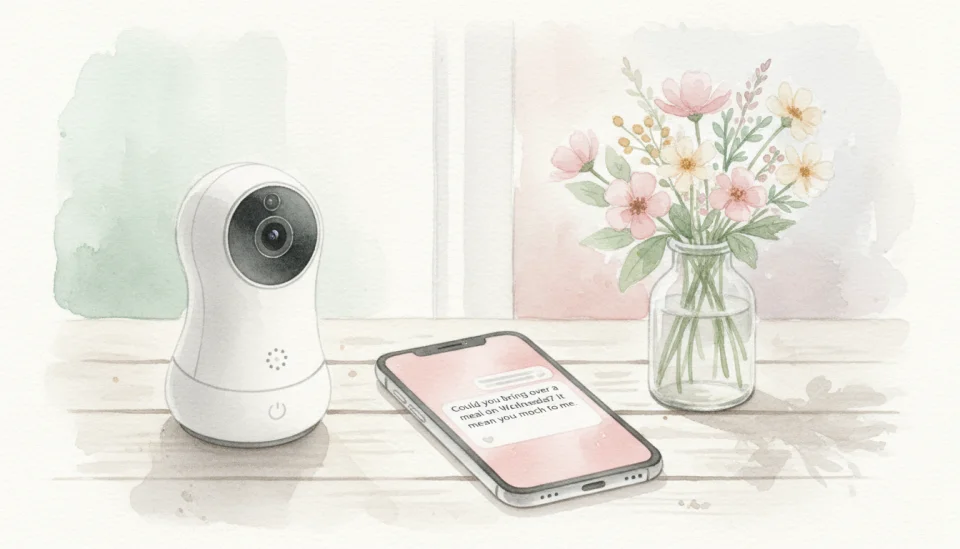
- Be specific: Instead of “Can you help me?”, say: “Could you bring me a lasagna on Wednesday? That would help me a lot.”
- Make it easy: “If you're going grocery shopping anyway, could you bring me three items? I can send you a list.”
- Show gratitude: “It would mean so much to me if you could watch the baby for an hour so I can sleep.”
People want to help – they just often don’t know how. By asking specifically, you make it easier for them to be there for you.
Self-Care in the Postpartum Period: Creating Time for Yourself – with Support
Self-care is not a luxury; it's a necessity. However, during the postpartum period, it often feels impossible to find time for yourself. This is where your network comes into play.
Small self-care moments you can indulge in with help:
- A friend watches your baby while you go for a 20-minute walk – alone, in the fresh air.
- Your partner or a neighbor takes care of the baby so you can take a bath in peace.
- You treat yourself to a foot massage or enjoy a cup of tea in silence.
- You call a friend just to talk – not about the baby, but about you.
These moments are not selfish. They are refueling stations that replenish your energy – so you can be there for your baby.
Combined Activities: Bringing Together Siblings and Neighborhood Kids
If you have older children, combined playdates can be a wonderful solution. Invite neighborhood kids over or organize a playgroup with other mothers, taking turns. This way, the kids have company, and you gain time – or can connect with other mothers.
Examples of combined activities:
- Picnic in the park with two or three families – everyone brings something, and the kids play together.
- Craft afternoon at a friend's house while you breastfeed or nap peacefully at home.
- Joint walks with strollers and older kids on scooters.
Such moments not only strengthen your social network but also show your children: We help each other.

Frequently Asked Questions: Asking for Help in the Postpartum Period
What if I don't have anyone to ask for help?
If your personal network is small, there are organizations like wellcome that provide volunteer helpers. Midwives, mothers’ centers, or church communities also often offer support. Don't hesitate to seek professional help – it's completely okay.
How do I handle it if someone says no?
A no is not a rejection of you, but often simply a matter of time or capacity. Thank them anyway and ask someone else. The more people you ask, the more likely you are to find support.
Do I have to reciprocate every help?
No. In the postpartum period, you can take without having to give back immediately. Later, when you're feeling better, you can show your gratitude – with a card, a small gift, or by being there for someone else.
What if visits become too much?
Set clear boundaries. Politely say: “I appreciate your visit, but I need some peace today. Can we meet next week?” Your needs take priority – and true friends will understand this.
Conclusion: Asking for Help is a Sign of Strength
The postpartum period is a time of vulnerability – and at the same time, an opportunity to strengthen your social network. By asking for help specifically, you give others the chance to be there for you. You show your child that community supports us. And you learn that self-care and accepting support are not weaknesses, but rather strengths.
So: Take the phone in your hand. Write the message. Ask for the lasagna, the groceries, the hour of sleep. You deserve it – and you are worth it.
Article translated from German → View original article
Sources & Research
Research Summary
Mütter im Wochenbett profitieren besonders von klarer Kommunikation, um gezielt Unterstützung von Nachbarn und Freunden zu erhalten. Praktische Hilfe wie Einkaufen, Kochen, Babysitten und Haushaltserleichterungen entlasten den Alltag, während Selbstsorgestrategien und gemeinsame Aktivitäten mit Geschwister- und Nachbarskindern die Erholung fördern.
Sources Used
- So unterstützt ihr Mütter im Wochenbett (Accessed on 2025-11-07)
- Schatten und Licht e.V. - Hilfsmaßnahmen (Accessed on 2025-11-07)
- Praktische Hilfe nach der Geburt | wellcome (Accessed on 2025-11-07)
- Tipps für eine entspannte Zeit nach der Geburt (Accessed on 2025-11-07)
- Zeitmanagement im Wochenbett - Elternbildung (Accessed on 2025-11-07)
- Geburt & Wochenbett: Wie Besucher fernhalten?Bitte helft mir (Accessed on 2025-11-07)
- Wochenbett Unterstützung: 10 Tipps für Freunde etc. (Accessed on 2025-11-07)
- Der einzige wirklich wichtige Rat fürs Wochenbett (Accessed on 2025-11-07)
Medical Disclaimer
The information provided in this article is for educational purposes only and is not intended as a substitute for professional medical advice, diagnosis, or treatment. Always seek the advice of your physician or other qualified health provider with any questions you may have regarding a medical condition. Never disregard professional medical advice or delay in seeking it because of something you have read on this website.
Similar Posts
Sibling Communication: How to Lovingly Prepare Your Child for the New Baby
Preparing your child for the arrival of a new baby is one of the most important tasks during pregnancy. With the right w...
Celebrating Sibling Love: 7 Cultural Rituals to Enrich Your Family Life After Birth
The first weeks with a baby are magical—and challenging for sibling children. Discover heartwarming rituals from differe...
The Spa Day for Siblings: 7 Creative Ways to Enjoy the Postpartum Period Together
The postpartum period with multiple children? Turn the challenge into an opportunity: A spa day at home gives siblings a...
Postpartum Without Chaos: How to Create Time for Yourself with 3 Simple Structures
The postpartum period doesn't have to end in chaos. Discover how flexible weekly plans, smart task division, and targete...