
You're lying comfortably next to your partner, the orgasm was intense – and suddenly you feel tears on your cheeks. Or you need to laugh for no reason, even though nothing funny has happened. Perhaps your face is tingling or you have a slight headache. Such moments can be unsettling, especially if they keep occurring. The good news: You're not alone, and there is nothing to worry about.

What Are Peri-Orgasmic Phenomena?
Peri-orgasmic phenomena are unusual emotional or physical reactions that occur just before, during, or immediately after orgasm – and they have nothing to do with the normal orgasmic response. They can range from slight tingling to intense emotional outbreaks.
A study involving 86 women found that 88% experienced emotional reactions such as crying, sadness, laughter, or even hallucinations. 61% reported physical symptoms such as headaches, muscle weakness, foot pain, facial tingling, sneezing, yawning, earaches, or nosebleeds. Most importantly: These symptoms are considered normal and harmless, even if they are unusual.
The Most Common Reactions at a Glance
- Crying (63%) – by far the most common reaction
- Sadness and Laughter (43% each) – often without an apparent reason
- Headaches (33%) – usually mild to moderate
- Less Common: Facial or ear tingling, sneezing, yawning, hallucinations, nosebleeds (2-6%)
Interestingly, only 17% of women experience these phenomena every time, while 69% only feel them occasionally. They also occur more frequently during partnered sex (51%) than during masturbation (9%) or vibrator use (14%).
Why Does This Happen? The Psychological and Neurological Explanation
Your body goes through an intense neurological and hormonal rollercoaster during an orgasm. Oxytocin, dopamine, endorphins, and other neurotransmitters flood your system – and sometimes your brain reacts to this in unexpected ways.

Emotional Release and Vulnerability
An orgasm is a moment of extreme vulnerability. Your nervous system switches from the sympathetic (fight-or-flight) to the parasympathetic (rest-and-digest). This shift can release suppressed emotions – similar to a deep massage or an intense yoga session. Crying or laughing then becomes a relief for built-up tension.
Neurological Overstimulation
Some physical symptoms – such as headaches, tingling, or sneezing – arise from temporary overstimulation of certain nerve pathways. The vagus nerve, which controls breathing, heart rate, and digestion, plays a central role here. In some women, it "fires" unusual signals after orgasm.
Context Dependence: Why It Happens More Often with a Partner
The fact that these phenomena occur more frequently during partnered sex points to a psycho-social component: Intimacy, emotional closeness, trust – or even unconscious tension – can amplify the reaction. Alone, you might be more relaxed or feel less "exposed".
When Should You Seek Medical Advice?
The vast majority of peri-orgasmic phenomena are harmless and do not require treatment. However, there are situations where medical evaluation is advisable:
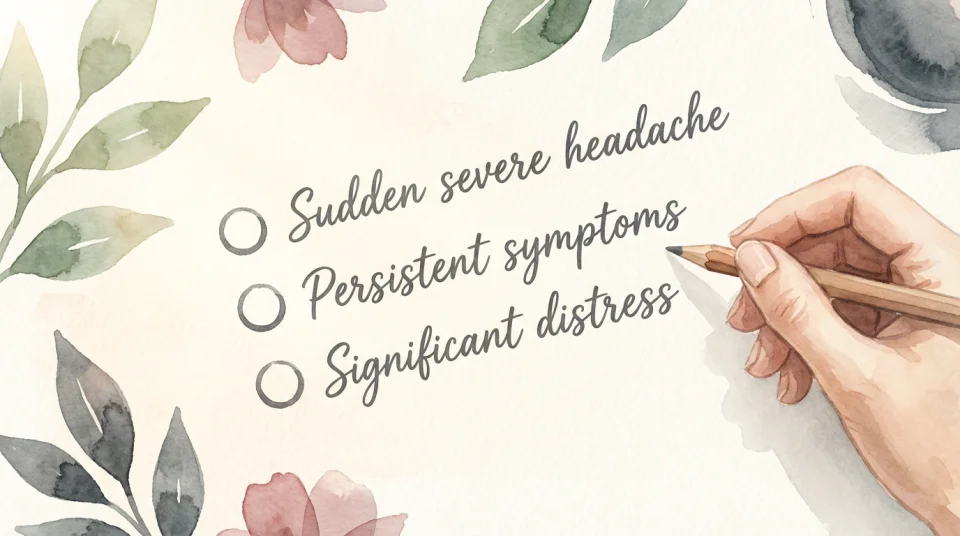
Red Flags: When to Take Action
- Sudden, severe headaches ("thunderclap headache") – could indicate a vascular disorder
- Persistent or worsening symptoms – if they do not subside within minutes
- Neurological deficits – such as numbness, paralysis, vision changes, or speech problems
- Significant emotional distress – if the reactions frighten you or prevent you from having sex
- New symptoms after age 40 – hormonal changes should be evaluated
If you’re unsure, talk to your gynecologist or a neurologist. It’s never "too much" or embarrassing to discuss your sexual health.
How to Cope with Peri-Orgasmic Phenomena
The most important thing is: Normalize your experience. Many women feel ashamed because they think they are reacting "wrongly". But your body is doing nothing wrong – it simply responds in its unique way.

Practical Strategies for Everyday Life
- Talk to your partner: Explain what’s happening so they are not unsettled. Openness fosters trust and relieves pressure.
- Observe patterns: Does it only occur in specific situations? With certain positions? After stressful days? Keeping a journal can help.
- Breathing techniques: Conscious, slow breathing before and after orgasm can calm the nervous system.
- Relaxation rituals: A warm bath, soft music, candlelight – anything that puts you in a relaxed state can help.
- Acceptance instead of struggle: Try not to suppress the reaction. The more you fight against it, the more tense you will become.
If the Reaction Distresses You
Some women find these phenomena disturbing or embarrassing – especially if they unexpectedly cry or laugh. Here, a sex therapist or psychologist can help understand the emotional background and develop coping strategies.
FAQ: The Most Common Questions About Peri-Orgasmic Phenomena
Is it normal to cry after an orgasm even though I’m happy?
Yes, absolutely. Crying is the most common peri-orgasmic reaction (63%) and often has nothing to do with sadness. It’s an emotional release after intense physical and mental tension.
Why does it only happen sometimes?
69% of women experience these phenomena only occasionally. Factors like stress level, cycle, emotional closeness to the partner, or day-to-day form play a role.
Can I do anything about it?
You don't have to do anything "against" it – it’s not an illness. If it bothers you, relaxation techniques, open communication, and self-acceptance can help.

Should I see a doctor if I get headaches after an orgasm?
Mild headaches are normal for 33% of women. See a doctor if: the pain is sudden and extremely severe, lasts longer, or is accompanied by other symptoms.
Why does it happen more often during partnered sex?
Emotional intimacy, vulnerability, and unconscious tension can amplify the reaction. Alone, you might be more relaxed.
Are hallucinations dangerous?
Short, harmless hallucinations (e.g., seeing colors, hearing sounds) are rare (2-6%) but not dangerous. They arise from intense neurological activity. If you experience persistent or frightening hallucinations, you should seek medical advice.
Can I still have fulfilling sex?
Yes! Most women find the phenomena to be occasionally surprising, but not disturbing. It’s important not to feel ashamed and to communicate openly with your partner.
You Are Not Alone – And You Are Not "Wrong"
Many women who experience peri-orgasmic phenomena report feelings of shame, embarrassment, or a sense of being "different". Yet research shows: These reactions are more common than thought – they are just rarely discussed openly.
Your body is not a mistake. It responds in its unique way to intimacy, pleasure, and vulnerability. The more we talk about these phenomena, the more normal they will become – and the fewer women will feel alone or "wrong".
The next time you cry, laugh, or feel a tingling sensation: Take a deep breath, remember these lines – and know that you belong to the many women whose bodies communicate just a bit more intensely. And that is perfectly okay.
Article translated from German → View original article
Sources & Research
Research Summary
Peri-orgasmic phenomena are unusual physical or emotional symptoms that occur during or shortly after orgasm, separate from the normal orgasmic response. While rare, these symptoms—including crying, laughter, headaches, tingling, and nosebleeds—are considered normal and benign, though they may cause embarrassment or concern if women are unaware they are experienced by others.
Sources Used
- Scientists studied the orgasms of 86 women. Here's what they found (Accessed on 2026-01-23)
- Orgasm-related laughing, crying, nosebleeds and more are normal, albeit rare (Accessed on 2026-01-23)
- Rare Peri-Orgasmic Symptoms Are Within Normal Range in Women (Accessed on 2026-01-23)
- Emotional and Physical Symptoms in Women with Peri-Orgasmic Phenomena (Accessed on 2026-01-23)
- Did You Climax or Are You Just Laughing at Me? Rare Phenomena Associated With Orgasm (Accessed on 2026-01-23)
- (048) PERI-ORGASMIC PHENOMENON IN WOMEN (Accessed on 2026-01-23)
Medical Disclaimer
The information provided in this article is for educational purposes only and is not intended as a substitute for professional medical advice, diagnosis, or treatment. Always seek the advice of your physician or other qualified health provider with any questions you may have regarding a medical condition. Never disregard professional medical advice or delay in seeking it because of something you have read on this website.
Similar Posts
Rediscovering Your Desire: The Gentle Restart After a Long Break
After months or years without sex, does everything feel foreign? You are not alone. Learn why breaks are completely norm...
Medications Dampen Your Desire? What You Need to Know Now
Many medications significantly affect libido and orgasm ability. Here you will learn which substances typically cause pr...
Masturbation in Relationships: How to Talk Openly and Without Jealousy
Masturbation is normal – even in relationships. Yet, secrecy creates distance. Learn how to talk openly and relaxedly ab...
Breastfeeding as an Intimate Experience: How to Recognize and Lovingly Protect Your Boundaries
Breastfeeding is pure closeness – yet it can sometimes trigger unexpected physical or emotional reactions. You are not a...