You stand in the shower, and suddenly realize: It's been months since you truly felt yourself – not just physically, but also in your desire. The break was unplanned; it just happened. Pregnancy, childbirth, breastfeeding, exhaustion, or simply life. Now you wonder: Will it ever come back? The good news: Yes, and you can actively help it.

Why Taking a Break from Sex is Completely Normal – and What Happens During This Time
Many women experience a longer pause in their sexuality after childbirth, during stressful life phases, or simply due to relationship changes. This is not a sign of failure, but a natural response of your body and mind.
From a scientific perspective, here's what happens: After a long period of abstinence, the vagina becomes less regularly supplied with blood, which can lead to a slight narrowing. This means that the first sexual encounters may feel unusual or even uncomfortable. But here’s the reassuring news: Elasticity returns, especially in women before menopause. Your body just needs time and gentle impulses to get used to it again.
Something emotional changes as well: When desire has not been activated for a long time, the nervous system may respond less sensitively to erotic stimuli. Yet just like a muscle, your ability to desire can be retrained step by step.
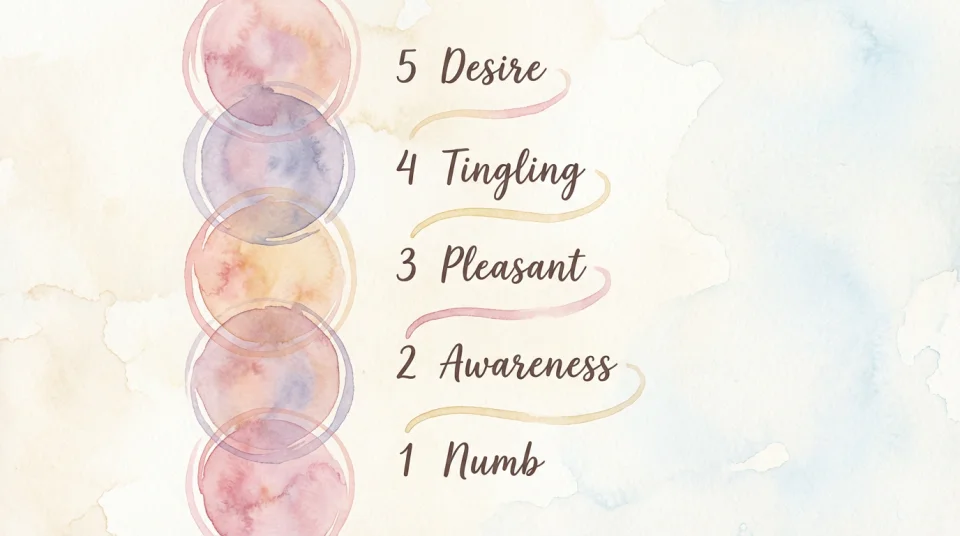
The Sensitivity Scale: Learn to Perceive Your Sensations Anew
Before you take action, it's helpful to assess your current sensitivity. This Sensitivity Scale helps you reflect on your perception and recognize small progress:
- Level 1 – Numb: You hardly feel anything; touches feel neutral or foreign.
- Level 2 – First Awareness: You notice touches, but they do not evoke desire.
- Level 3 – Pleasant: Touches feel good, but not yet arousing.
- Level 4 – Tingling: You feel a slight tingling, first signs of arousal.
- Level 5 – Desire: Touches trigger clear desire and arousal.
Take time once a week to feel where you currently stand. No pressure, no expectations – just curiosity about yourself. This self-reflection is the first step to rediscovery.
Taking Small Steps: Mini-Impulses for More Desire
The key to the restart is not in big actions, but in tiny, regular impulses. Your body needs time to regain trust and sensitivity. Here are gentle exercises you can integrate into your daily routine:
1. Touch without Purpose
Start with yourself: Take 5 minutes in the shower or in bed to touch your body without sexual intention. Stroke your arms, your belly, your thighs. Feel the texture of your skin, the warmth, the contours. This exercise reactivates your body awareness.
2. Pelvic Floor Relaxation
Many women unconsciously hold tension in their pelvic floor. Lie down comfortably, breathe deeply into your belly, and imagine your pelvic floor becoming soft and wide with each exhale. This relaxation is crucial for regaining sensitivity.
3. Gradual Acclimatization with Fingers
When you're ready, try gently touching your vagina with your fingers – very slowly. Use enough lubricant (saliva, cream, or personal lubricant). Let your finger rest still, without movement, until your body relaxes. This is not masturbation, but a phase of acclimatization that gives your tissues time to remember.
4. Cultivating Desirable Thoughts
Desire begins in the mind. Allow yourself to think briefly during the day about something erotic – an image, a memory, a fantasy. Even if it feels artificial at first: You are training your brain to send desirable signals again.

The 14-Day Plan: Your Personal Ranking Booster
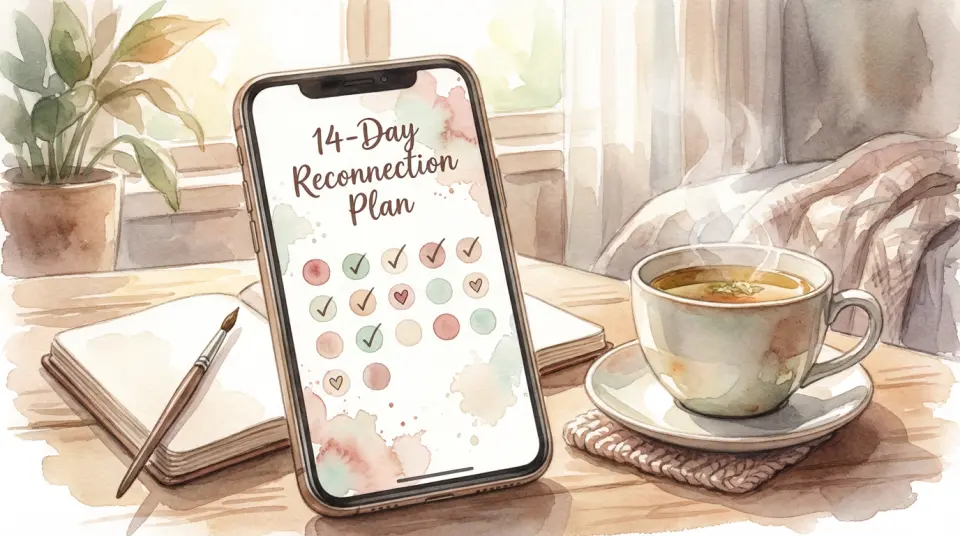
To structure your restart, we have developed a 14-Day Plan that guides you daily with small impulses. This plan is available as an audio in the app and is easy to track – so you can see your progress.
What to Expect:
- Day 1–3: Body awareness without touch (breathing exercises, pelvic floor relaxation)
- Day 4–7: Gentle self-touch, feeling the skin, getting to know lubricants
- Day 8–10: First vaginal touches, acclimatization to pressure and warmth
- Day 11–14: Integrating desirable thoughts, allowing mini-arousal, checking the sensitivity scale
Each day only takes 5–10 minutes. You can repeat days if you need more time – there is no right or wrong. The plan is your companion, not a drill.
In the app, you'll also find a tracking tool where you can note daily how you felt. This helps you recognize patterns and celebrate your progress – even the small ones.
New Excitement Can Boost Your Libido
Interestingly, research shows: A new partner or a new sexual situation can even increase libido after a break. Why? Because excitement and novelty activate the brain's reward system and release pleasurable hormones.
This doesn't mean you need a new partner. But you can bring novelty into your sexuality: a new lubricant, a different time of day, an unusual location (e.g., the guest room instead of the bedroom), or a new fantasy. These small changes can have surprisingly much impact.
Frequently Asked Questions About the Restart
How long does it take to feel desire again?
This is very individual. Some women feel first changes after a few days, others need weeks or months. The important thing is: Patience and consistency. Small, regular impulses are more effective than rare, big efforts.
What if I still feel nothing?
If after several weeks of consistent practice there is no change, it may be helpful to speak with a gynecologist or sexual therapist. Sometimes hormonal factors (e.g., post-birth or during breastfeeding) can play a role that may need medical supervision.
Do I need a partner for the restart?
No. The restart begins with you. Your relationship with your own body and your desire is the foundation. If you are in a partnership, you can involve your partner later – but the first step belongs to you alone.
Is lubricant really necessary?
Yes, especially after a longer break. Lubricant reduces friction and makes touch more pleasant. It is not a sign of failure, but a smart aid to ease your body's acclimatization.

Your Body Remembers – Give It Time
The restart after a long break is not a sprint, but a loving reconnection with yourself. Your body hasn't forgotten what desire feels like – it just needs gentle reminders and patience.
Use the sensitivity scale to see your progress. Integrate mini-impulses into your daily life. And if you need structure, the 14-day plan accompanies you step by step. You are not alone on this journey – and every small change is a success.
Your desire belongs to you. It's never really gone, just sometimes quiet. Now is the time to listen to it again.
Article translated from German → View original article
Sources & Research
Research Summary
Frauen nach einer längeren sexuellen Pause, insbesondere Mütter, erleben oft eine vorübergehende Verengung der Vagina und reduzierte Sensibilität, die durch sanfte Gewöhnung und kleine Schritte rückgängig gemacht werden kann. Normale hormonelle Anpassungen und Beckenbodenübungen helfen, Lust und Elastizität wiederzuerlangen. Ein 14-Tage-Plan mit Audio und App-Tracking bietet ermutigende, schrittweise Impulse für Selbstreflexion und Luststeigerung.
Sources Used
- Sex-Verzicht: Das passiert, wenn du keinen Sex mehr hast (Accessed on 2026-01-23)
- Nach einer langen Sexpause geht die Penetration nicht mehr (Accessed on 2026-01-23)
- Sex-Verzicht: Das passiert, wenn du keinen Sex mehr hast (Accessed on 2026-01-23)
- Nach einer langen Sexpause geht die Penetration nicht mehr (Accessed on 2026-01-23)
- Sexualität in Menopause und Andropause: Vieles kann ... (Accessed on 2026-01-23)
- Abnahme der sexuellen Funktion nach der Menopause ... (Accessed on 2026-01-23)
- Von Hitzewallungen zu neuen Höhen: Sexualität in der ... (Accessed on 2026-01-23)
- Wechseljahre: War's das mit der Sexualität? (Accessed on 2026-01-23)
- Sexualität: Wie die Menopause das Liebesleben beeinflusst (Accessed on 2026-01-23)
- Libido und Menopause: Eine erfüllte Sexualität wiederfinden (Accessed on 2026-01-23)
Medical Disclaimer
The information provided in this article is for educational purposes only and is not intended as a substitute for professional medical advice, diagnosis, or treatment. Always seek the advice of your physician or other qualified health provider with any questions you may have regarding a medical condition. Never disregard professional medical advice or delay in seeking it because of something you have read on this website.
Similar Posts
Medications Dampen Your Desire? What You Need to Know Now
Many medications significantly affect libido and orgasm ability. Here you will learn which substances typically cause pr...
Masturbation in Relationships: How to Talk Openly and Without Jealousy
Masturbation is normal – even in relationships. Yet, secrecy creates distance. Learn how to talk openly and relaxedly ab...
Breastfeeding as an Intimate Experience: How to Recognize and Lovingly Protect Your Boundaries
Breastfeeding is pure closeness – yet it can sometimes trigger unexpected physical or emotional reactions. You are not a...
Orgasm as a Natural Pain and Stress Killer: What Really Happens in Your Body
Are you wondering if orgasms really help with headaches or why you feel so relaxed afterward? Here you will learn about ...