Imagine this: You're lying in bed, your head pounding from a long day, your shoulders tense. Then it happens – an orgasm, and suddenly everything feels lighter. Sounds too good to be true? But it’s not. Your body has a built-in wellness program that alleviates pain and reduces stress. Let’s explore what’s going on inside you.

The Hormone Symphony: What Your Body Releases During Orgasm
During orgasm, your body turns into a little hormone factory. Endorphins – often referred to as "happiness hormones" – flood your system and act as a natural painkiller. At the same time, oxytocin is released, the "cuddle hormone," which promotes deep relaxation.
A 2013 study showed that 60% of participants with migraines reported that sexual activity improved their well-being. The endorphins work similarly to a mild painkiller – just without the side effects.
What Exactly Happens in Your Body?
- Endorphins: Bind to the same receptors as opiates and reduce pain perception
- Oxytocin: Lowers cortisol (your stress hormone) and promotes bonding and well-being
- Dopamine: Activates your reward system and boosts mood
- Prolactin: Causes the pleasant fatigue afterward
This hormone combination explains why you often feel reborn after an orgasm – relaxed, pain-free, and happy.

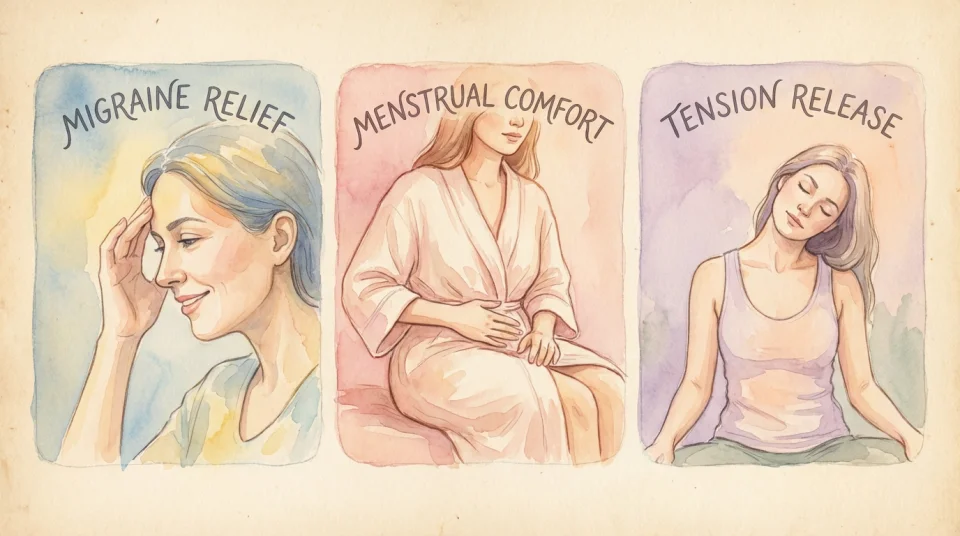
Why Orgasms Help Relieve Pain – from Migraines to Menstrual Cramps
Maybe you've experienced it yourself: headaches that dissolve into thin air after an orgasm. This is no coincidence. The release of endorphins works specifically to relieve pain – from migraines, menstrual cramps, and even chronic back pain.
What Types of Pain Can an Orgasm Help With?
- Headaches and Migraines: Endorphins notably decrease pain intensity
- Menstrual Cramps: Increased circulation and muscle relaxation alleviate abdominal pain
- Tension: Muscle contractions release stiffness in the neck and back
- Chronic Pain: Regular release of endorphins can positively impact pain memory
Important: An orgasm is not a substitute for medical treatment but can be a wonderful complement. If pain persists, please consult your doctor.
The Rhythmic Contractions: Why They Sometimes Feel Crampy
During orgasm, your pelvic floor and vaginal muscles contract rhythmically – between 4 and 15 times. These contractions are completely normal and part of the orgasmic response. However, sometimes they can feel crampy, especially if the muscles are tense.
There can be various reasons for this: stress, dehydration, or simply very intense tension during climax. The good news? These cramps are usually harmless and pass quickly.
What You Can Do if Contractions Become Uncomfortable:
- Take deep and conscious breaths – this relaxes the muscles
- Drink enough water (dehydration can intensify cramps)
- Apply heat afterward: A heating pad or warm bath loosens the muscles
- Kegel exercises: Regular training makes the muscles more supple
- Magnesium: Can help prevent muscle cramps (consult your doctor)
Remember: Your body is doing something amazing right now. The contractions are a sign that everything is working as it should.

Orgasm During Pregnancy: Safety and What You Should Know
Many pregnant women wonder: Is an orgasm safe for my baby? The answer in most cases is: Yes, absolutely! During or after orgasm, your belly may become hard, and mild cramps may occur. This is usually completely harmless and subsides quickly.
The contractions are not labor contractions, but a normal reaction of the uterine muscles. Your baby is well protected by the amniotic fluid and feels nothing uncomfortable.
When Should You Be Cautious?
In high-risk pregnancies, your doctor may give different recommendations. Consult them if:
- You have experienced preterm labor or have a risk of preterm birth
- Your placenta is low-lying (placenta previa)
- You have bleeding or severe pain
- Your cervix is already dilated
- You are expecting multiples and there are complications
In an uncomplicated pregnancy, however, you can enjoy your sexuality and orgasms to the fullest – they can even reduce stress and enhance your well-being.

Facts vs. Promises: What Orgasms Can Really Do – and What They Can't
Many myths circulate about the "healing power" of orgasms. Let’s clarify:
That's True ✓That's Exaggerated ✗Endorphins naturally relieve painOrgasms cure diseasesOxytocin lowers cortisol and stressThey replace therapy for anxiety disordersBetter sleep from prolactinThey permanently resolve sleep disordersSafe in uncomplicated pregnanciesThey promote labor (only near term)Mood-enhancing due to dopamineThey cure depressionThe Truth: Orgasms are a wonderful, natural means for greater well-being. They support your body in relaxation and pain relief – but they are not a cure-all. Use them as part of your self-care, not as a substitute for medical help.
Your Body, Your Power: How to Use the Benefits for Yourself
Now you know what happens in your body. But how do you incorporate this knowledge into your daily life?
Practical Tips for More Relaxation and Pain Relief:
- For Headaches: Try it out before reaching for a pill – many women report quick relief
- Before Bed: The prolactin release makes you pleasantly sleepy
- For Stress: Consciously schedule time for intimacy – even with yourself
- During Your Period: Orgasms can relieve cramps (yes, even during menstruation!)
- During Pregnancy: Enjoy the closeness with your partner – it’s safe and feels good
Your body is a marvel. The ability to relieve pain and reduce stress through orgasms is a gift of nature. Use it lovingly and without pressure – for that is when it unfolds its full effect.
You are not alone with your questions. Many women are just discovering this natural power. Be curious, be gentle with yourself – and trust that your body knows exactly what it needs.
Article translated from German → View original article
Sources & Research
Research Summary
Orgasmen setzen Endorphine und Oxytocin frei, die Stresshormone wie Cortisol senken, Entspannung fördern und Schmerzen lindern. Die rhythmischen Kontraktionen der Beckenbodenmuskulatur können manchmal krampfartig empfunden werden, sind aber normal. Bei Risikoschwangerschaften sind leichte Krämpfe meist harmlos, anhaltende Beschwerden erfordern ärztlichen Rat.
Sources Used
- Ist Orgasmus gesund? Vorteile für Körper und Geist (Accessed on 2026-01-23)
- Orgasmus & Gesundheit: Warum Lust auch gesund ist (Accessed on 2026-01-23)
- Oh, Orgasmus! So gesund ist der Höhepunkt - Ovy (Accessed on 2026-01-23)
- Die Heilkraft des Orgasmus – ein Weg zur Heilung und ... (Accessed on 2026-01-23)
- 7 Gründe, warum Sex gesund ist - Love (Accessed on 2026-01-23)
- Selbstbefriedigung - Warum Masturbieren gesund ist (Accessed on 2026-01-23)
- Rub it away - Masturbation als Schmerzmittel (Accessed on 2026-01-23)
- Die Wahrheit zu Sex & Orgasmen als Mittel gegen Stress (Accessed on 2026-01-23)
- Ist Orgasmus gesund? Vorteile für Körper und Geist (Accessed on 2026-01-23)
- Orgasmus & Gesundheit: Warum Lust auch gesund ist (Accessed on 2026-01-23)
- Oh, Orgasmus! So gesund ist der Höhepunkt - Ovy (Accessed on 2026-01-23)
- Die Heilkraft des Orgasmus – ein Weg zur Heilung und ... (Accessed on 2026-01-23)
- 7 Gründe, warum Sex gesund ist - Love (Accessed on 2026-01-23)
- Selbstbefriedigung - Warum Masturbieren gesund ist (Accessed on 2026-01-23)
- Rub it away - Masturbation als Schmerzmittel (Accessed on 2026-01-23)
- Die Wahrheit zu Sex & Orgasmen als Mittel gegen Stress (Accessed on 2026-01-23)
Medical Disclaimer
The information provided in this article is for educational purposes only and is not intended as a substitute for professional medical advice, diagnosis, or treatment. Always seek the advice of your physician or other qualified health provider with any questions you may have regarding a medical condition. Never disregard professional medical advice or delay in seeking it because of something you have read on this website.
Similar Posts
Rediscovering Your Desire: The Gentle Restart After a Long Break
After months or years without sex, does everything feel foreign? You are not alone. Learn why breaks are completely norm...
Medications Dampen Your Desire? What You Need to Know Now
Many medications significantly affect libido and orgasm ability. Here you will learn which substances typically cause pr...
Masturbation in Relationships: How to Talk Openly and Without Jealousy
Masturbation is normal – even in relationships. Yet, secrecy creates distance. Learn how to talk openly and relaxedly ab...
Breastfeeding as an Intimate Experience: How to Recognize and Lovingly Protect Your Boundaries
Breastfeeding is pure closeness – yet it can sometimes trigger unexpected physical or emotional reactions. You are not a...