
You have been taking your medication for weeks – and suddenly you notice: Desire is gone. Touches feel different, orgasms do not occur, or arousal does not kick in at all. You are not alone: Up to 80% of women taking certain antidepressants experience sexual changes. But there are ways to cope – and you do not have to choose between health and intimacy.
Why Medications Affect Your Desire
Many active ingredients deeply impact hormone and neurotransmitter balance. What helps your body in one area can trigger side effects in another – including your sexuality. Here are the key mechanisms:

- Selective Serotonin Reuptake Inhibitors (SSRIs): These antidepressants raise serotonin levels in the brain – this helps against depression, but simultaneously dampens sexual impulses. Up to 80% of women report a lack of desire, reduced arousal, or difficulties with orgasm.
- Beta-blockers: Medications like metoprolol lower blood pressure but also reduce blood flow in the genital area. This can lead to vaginal dryness and reduced arousal.
- Opioids: With prolonged use (e.g., for chronic pain), up to 70% of women experience a lack of desire and pain during sex because opioids disrupt the hormonal balance.
- Antipsychotics: Many increase prolactin levels – a hormone that disturbs the sexual hormone balance. Depending on the active ingredient, 16-60% of women experience sexual dysfunction.
These numbers show: You are not "broken" – your body reacts to chemical changes. And that is exactly why there are solutions.
Typical Changes: What You Might Notice
Sexual side effects can manifest in various ways. You may recognize yourself in one or several of these points:
- Lack of desire: You think less about sex, feel no longer attracted to your partner, or simply have no desire.
- Arousal issues: Your body does not respond as it used to – moisture is absent, touches feel neutral or uncomfortable.
- Orgasm difficulties: The climax does not occur, takes much longer, or feels diminished.
- Vaginal dryness: Especially with beta-blockers or hormone-altering medications, natural lubrication may decrease.
- Pain during sex: Due to dryness or altered sensitivity, intimacy can become uncomfortable.

Important: These changes are not a weakness or a sign of lack of love. They are biological reactions to active ingredients – and they can often be influenced.
What You Can Do: Strategies for More Wellbeing
Even if you should not change your medication on your own, there are several things you can try:
Watch Timing and Dosage
Some women notice that sexual side effects are stronger at certain times of the day. If you take your medication in the evening and feel more desire in the morning, that could be a pattern. Talk to your doctor about it – sometimes the timing can be adjusted.
Use Aids
- Lubricant: For vaginal dryness, a good lubricant (preferably water-based) can work wonders.
- Vibrators or other toys: Stronger stimulation can help when arousal is harder to achieve.
- Pelvic floor training: Regular training improves circulation and can enhance sensitivity.
Communication with Your Partner
Openness creates understanding. Explain that your reduced desire is not due to a lack of affection but is a side effect. Together, you can find new paths: more foreplay, different touches, less pressure.

Reduce Stress and Practice Self-Care
Medications are just one factor. Stress, lack of sleep, and exhaustion amplify sexual problems. Small rituals – a warm bath, breathing exercises, time for yourself – can help you reconnect with your body.
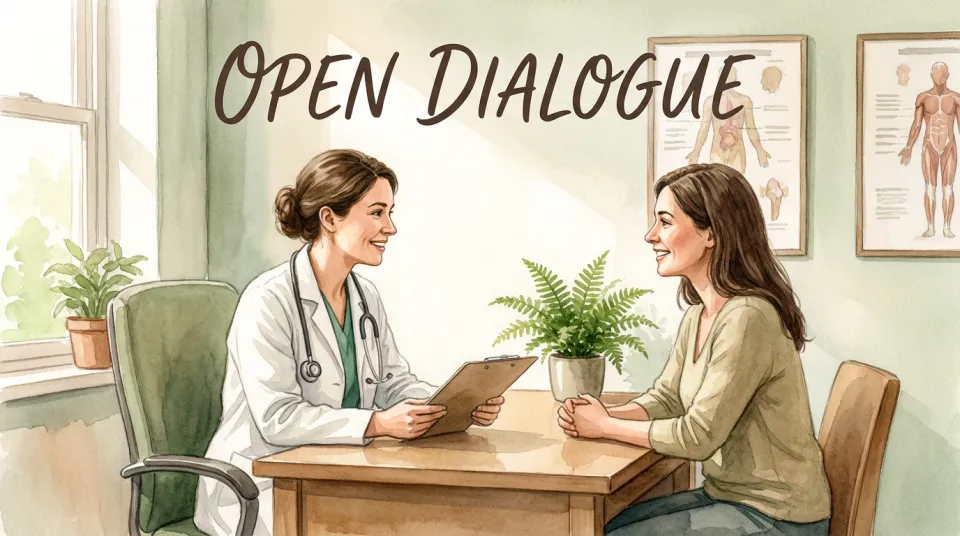
The Conversation with Your Doctor: How to Get the Most Out of It
Many women hesitate to address sexual side effects. However, it is your right to talk about all aspects of your health – including intimacy. Here are specific strategies:
Preparation is Everything
Before your appointment, note what exactly has changed: Since when? How severe? In which situations? This helps you stay concrete and gives your doctor important clues.
Ask About Alternatives
Not all medications work the same. For antidepressants, there are alternatives like Bupropion or Agomelatine, which are often better tolerated. For beta-blockers, other substances or lower doses may help. Actively ask about options.
Additional Support
In some cases, complementary measures can help: Studies show that Sildenafil (known as Viagra) also shows promising results in women for vaginal dryness and orgasm difficulties due to SSRIs. Talk to your doctor about this.
Questions for Your Next Doctor's Appointment
To be well-prepared, here is a list of specific questions you can ask:
- "Are sexual side effects common with my medication?"
- "Are there alternatives with less impact on sexuality?"
- "Can I adjust the dosage or change the timing of the intake?"
- "How long does it take for my body to adjust to the medication?"
- "Are there supportive measures like hormones or other substances?"
- "Should I involve a sex therapist or gynecologist?"
- "What happens if I stop the medication – is that an option?"
- "Are there interactions with supplements or herbal remedies?"
Your doctor is your partner in treatment – and if they do not take your concerns seriously, you have the right to seek a second opinion.
You Are More Than Your Side Effects
It is frustrating when a medication that helps you in one area creates problems in another. But you do not have to settle for that. Your sexuality is an important part of your wellbeing – and there are ways to protect it, even if you depend on medications.
Be patient with yourself. Changes take time, and sometimes it is a process of trial and error. But with openness, self-care, and the right medical support, you can find a way that works for you.

You are not alone – and you deserve to feel comfortable and alive in your body. 💛
Article translated from German → View original article
Sources & Research
Research Summary
Viele gängige Medikamente wie SSRI-Antidepressiva, Betablocker und Opioide können bei Frauen die Libido mindern, zu Scheidentrockenheit, Erregungsstörungen oder Orgasmusschwierigkeiten führen. Betroffene Frauen sollten Strategien wie Medikamentenwechsel, Lebensstiländerungen und offene Gespräche mit Ärzten nutzen, um Alternativen zu erörtern. Eine vorbereitete Liste mit Fragen für Arzttermine hilft, sexuelle Nebenwirkungen anzusprechen und Lösungen zu finden.
Sources Used
- Wenn Medikamente die Lust nehmen (Accessed on 2026-01-23)
- Herzmedikamente beeinflussen die sexuelle Funktion (Accessed on 2026-01-23)
- Sexuelle Dysfunktion durch Medikamente (Accessed on 2026-01-23)
- Medikamente als Lustkiller: Diese Arzneien können die ... (Accessed on 2026-01-23)
- Nebenwirkungen von Medikamenten auf die Sexualität (Accessed on 2026-01-23)
- Medikamente und ihre Nebenwirkungen auf die Sexualität (Accessed on 2026-01-23)
- Libidoverlust: Keine Lust auf Sex (Accessed on 2026-01-23)
- Sexuelle Funktionsstörungen der Frau (Accessed on 2026-01-23)
- Wenn Medikamente die Lust nehmen (Accessed on 2026-01-23)
- Herzmedikamente beeinflussen die sexuelle Funktion (Accessed on 2026-01-23)
- Sexuelle Dysfunktion durch Medikamente (Accessed on 2026-01-23)
- Medikamente als Lustkiller: Diese Arzneien können die ... (Accessed on 2026-01-23)
- Nebenwirkungen von Medikamenten auf die Sexualität (Accessed on 2026-01-23)
- Medikamente und ihre Nebenwirkungen auf die Sexualität (Accessed on 2026-01-23)
- Libidoverlust: Keine Lust auf Sex (Accessed on 2026-01-23)
- Sexuelle Funktionsstörungen der Frau (Accessed on 2026-01-23)
Medical Disclaimer
The information provided in this article is for educational purposes only and is not intended as a substitute for professional medical advice, diagnosis, or treatment. Always seek the advice of your physician or other qualified health provider with any questions you may have regarding a medical condition. Never disregard professional medical advice or delay in seeking it because of something you have read on this website.
Similar Posts
Rediscovering Your Desire: The Gentle Restart After a Long Break
After months or years without sex, does everything feel foreign? You are not alone. Learn why breaks are completely norm...
Masturbation in Relationships: How to Talk Openly and Without Jealousy
Masturbation is normal – even in relationships. Yet, secrecy creates distance. Learn how to talk openly and relaxedly ab...
Breastfeeding as an Intimate Experience: How to Recognize and Lovingly Protect Your Boundaries
Breastfeeding is pure closeness – yet it can sometimes trigger unexpected physical or emotional reactions. You are not a...
Orgasm as a Natural Pain and Stress Killer: What Really Happens in Your Body
Are you wondering if orgasms really help with headaches or why you feel so relaxed afterward? Here you will learn about ...